 Sleep dentistry
Recommended next step
Sleep Apnea, Snoring & Bruxism
Learn how CEOC evaluates snoring, suspected sleep apnea and bruxism from a dental sleep medicine perspective.
View sleep apnea treatmentCWA Island of Healing · Patient Education
Sleeping well is also part of well-being…
Dental sleep medicine · CEOC Curaçao · Willemstad
Behind loud snoring, there may be more than a nighttime nuisance: it can be a sign of sleep apnea. Breathing poorly while you sleep can affect your energy, your heart, your concentration, and your quality of life.
From CWA Island of Healing, we want to remind you that health does not stop at the mouth: breathing well, sleeping well, and waking up with energy are also part of overall well-being.
In Curaçao, the Centro de Especialidades Odontológicas Curaçao — CEOC NV, located at Saliña 145, has trained professionals who can guide and support patients with suspected or diagnosed mild Obstructive Sleep Apnea, through a specialized dental sleep evaluation and the use of mandibular advancement devices when indicated.
Learn when to seek help and how dentistry can be part of the solution.

Sleep apnea & snoring
When snoring may be a warning sign
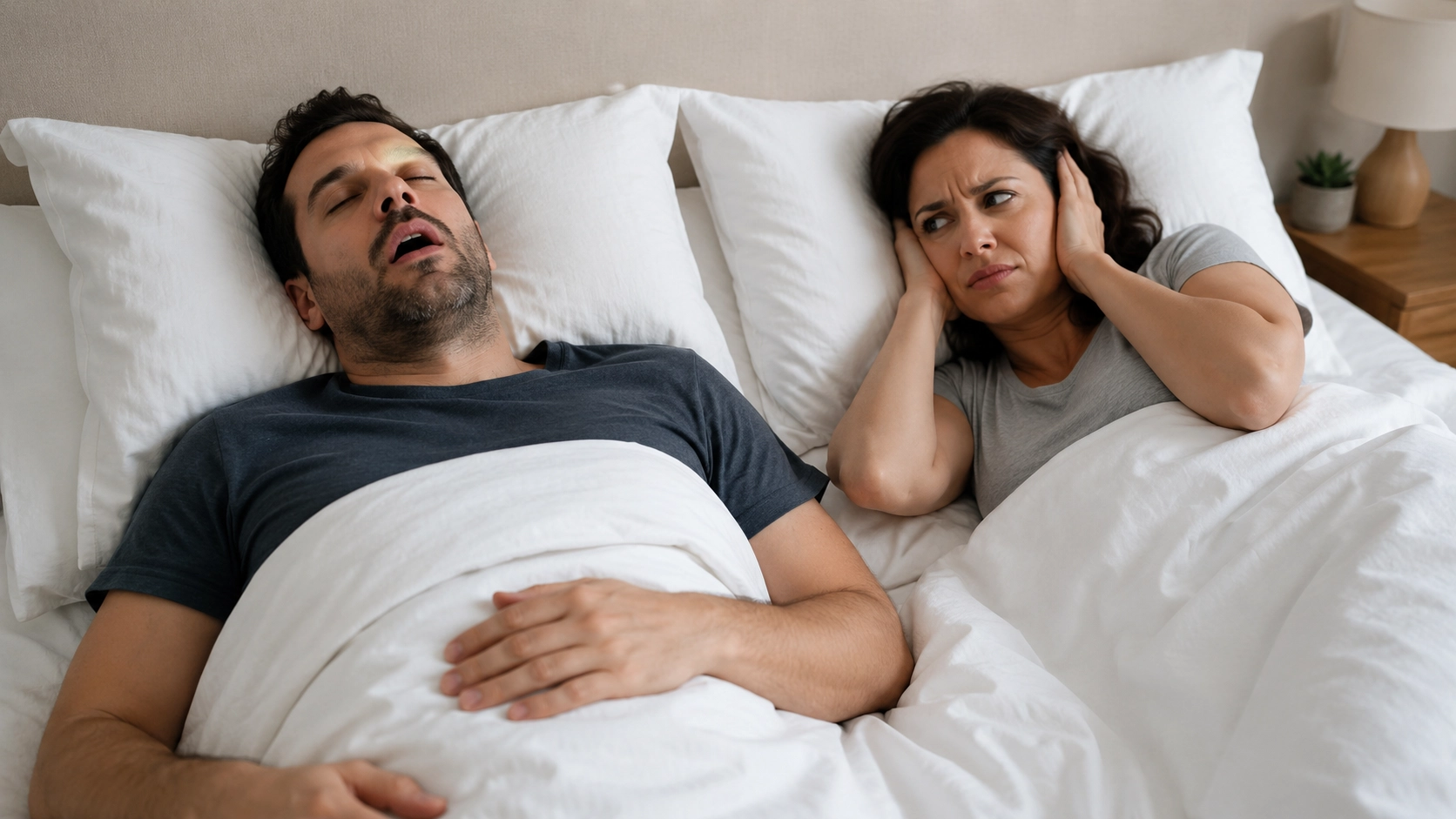
In Curaçao, many people snore. Sometimes it may seem funny, but when snoring is loud, frequent, and accompanied by pauses in breathing, non-restorative sleep, or daytime tiredness, it can be a sign of Obstructive Sleep Apnea.
Obstructive sleep apnea, diagnosis, and dental treatment with a 4P approach
Obstructive Sleep Apnea (OSA) occurs when the upper airway narrows or becomes blocked during sleep. Breathing stops for a few seconds, oxygen levels drop, sleep becomes fragmented, and the person may wake up without realizing it.
The international consensus document recommends using the term OSA to clearly distinguish it from central sleep apnea. It also reminds us that severity should not be evaluated only by the apnea-hypopnea index (AHI), but also by symptoms, oxygenation, obesity, and associated diseases.
Untreated OSA does more than disrupt sleep. Its main mechanisms are intermittent hypoxia, repeated micro-awakenings, and changes in intrathoracic pressure. Over time, this can increase important health risks.
Hypertension, arrhythmias, heart disease, and heart failure can coexist with or worsen due to OSA.
There is a higher risk of sleepiness, traffic or workplace accidents, stroke, and deterioration of memory or attention.
OSA is associated with type 2 diabetes, metabolic syndrome, and poorer metabolic control.
Fatigue, irritability, depression, low performance, and deterioration of family rest can also be present.
Snoring is not enough to diagnose apnea. The diagnosis must be confirmed with a sleep study. Polysomnography records breathing, oxygen levels, heart rate, movements, snoring, sleep stages, and episodes of apnea or hypopnea.
In selected patients, respiratory polygraphy or a validated home sleep apnea test may also be used. The result allows the apnea-hypopnea index (AHI) to be calculated, nighttime oxygenation to be assessed, and the safest treatment to be decided.
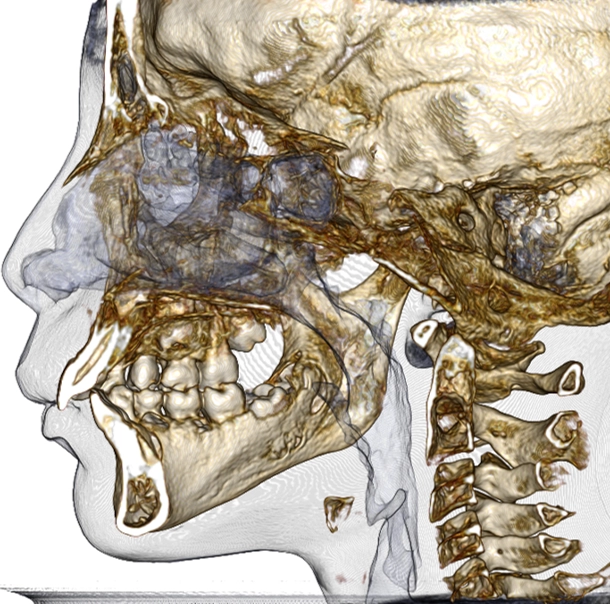
In addition, before starting any therapy, the consensus emphasizes the importance of confirming the diagnosis with a validated sleep study. Evaluation with CBCT and determination of pharyngeal volume can also be a useful tool in the diagnosis of airway obstructions.
CEOC NV
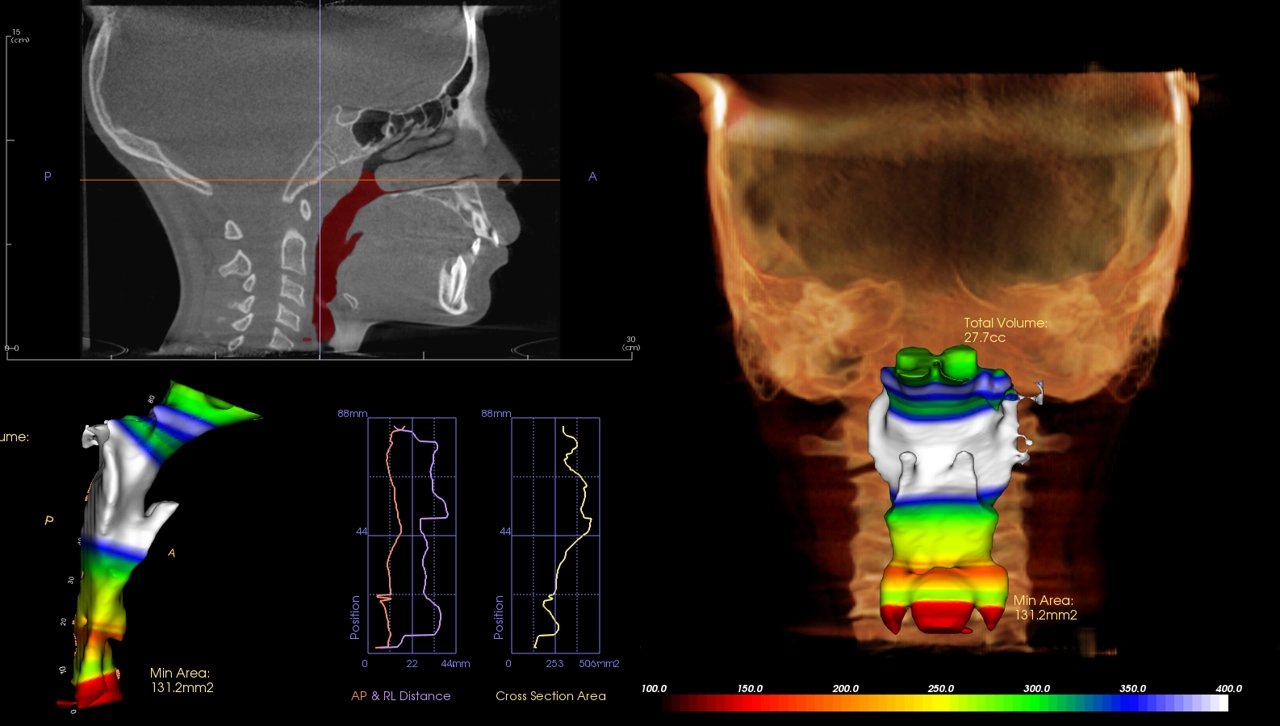
Identifying risk before complications appear: snoring, sleepiness, obesity, hypertension, or breathing pauses.
Acting early: sleep hygiene, weight control, avoiding alcohol at night, and treating reversible factors.
Not all patients are the same. Treatment is chosen according to severity, anatomy, symptoms, comorbidities, and preferences.
The patient makes informed decisions and participates in follow-up, adherence, and lifestyle changes.
This 4P approach summarizes today’s vision very well: everything is complementary, and nothing is mutually exclusive. CPAP, oral devices, positional treatment, surgery, sleep habits, and medical management can be rationally combined according to each case.
The dentist does not replace the sleep medicine specialist and does not diagnose apnea alone. Their role is to detect signs, evaluate oral health, and participate in treatment when there is a medical indication and a sleep study.
During a dental consultation, certain clues may appear: tooth wear or bruxism, dry mouth, a small or retruded jaw, snoring reported by the partner, daytime tiredness, and non-restorative sleep.
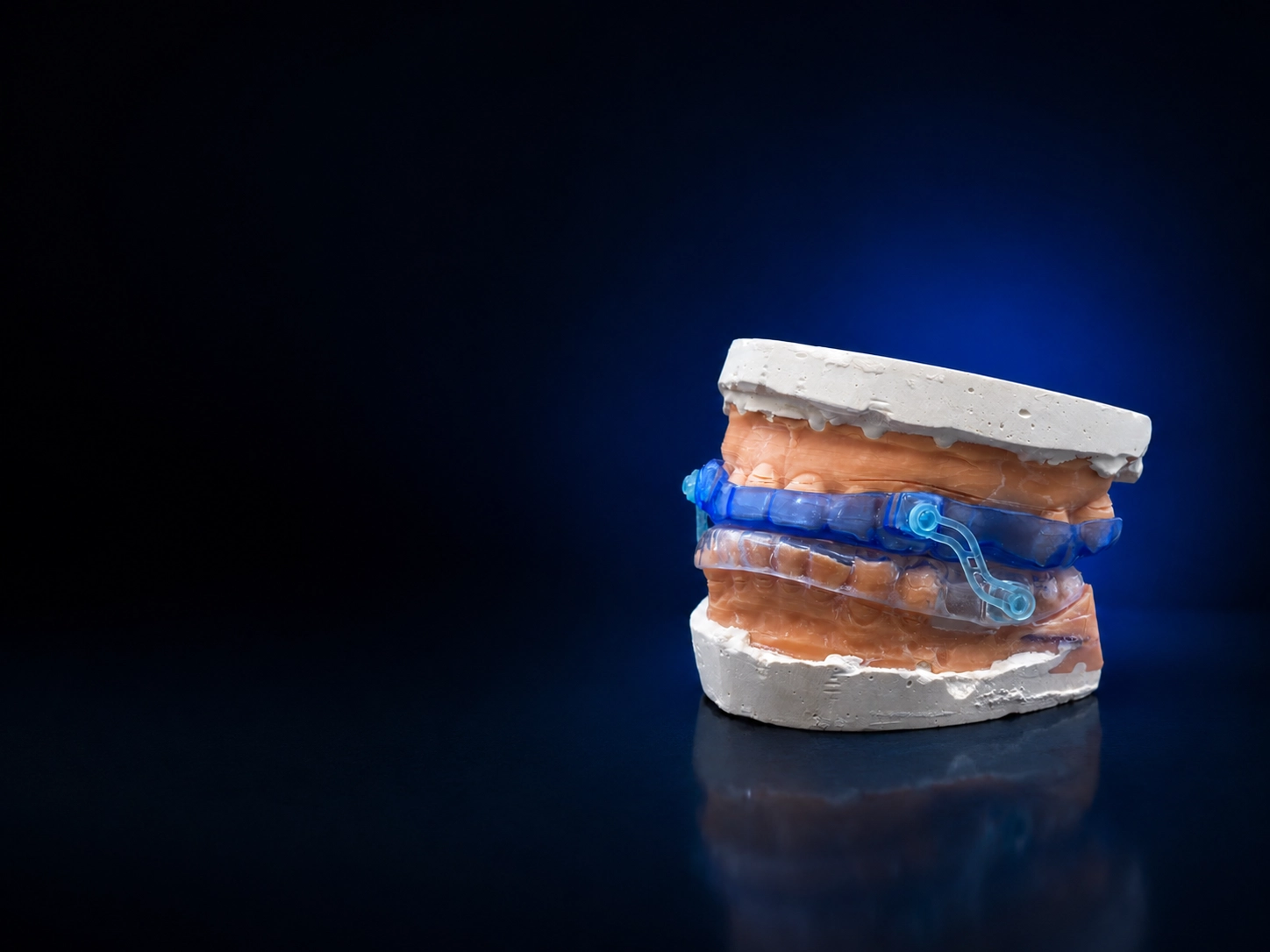
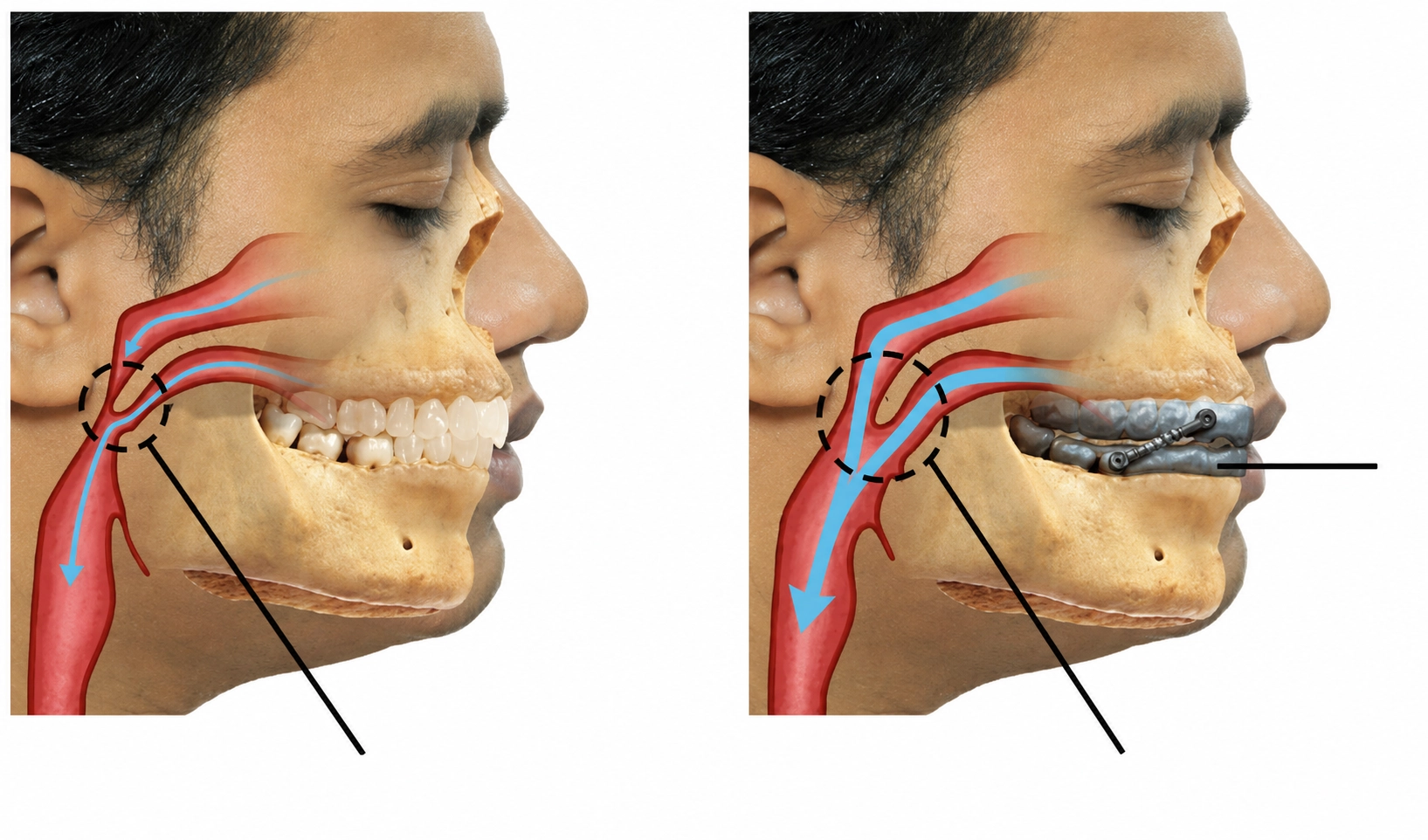
In patients with mild or moderate OSA without indication for CPAP, or in patients who do not tolerate CPAP, a mandibular advancement device (MAD) may be considered.
The MAD keeps the lower jaw slightly forward during the night, helping to open the airway and reduce snoring.


The consensus points out several key aspects: the diagnosis of OSA and the effectiveness of the MAD must be objectively verified through respiratory polygraphy or polysomnography; before prescribing it, the dentist must perform an oral examination; and the evidence favors custom-made and adjustable devices, with follow-up coordinated with a sleep unit.
A MAD is not a generic mouthguard. It requires evaluation of the teeth, gums, temporomandibular joint, and bite; progressive adjustments; comfort checks; and objective verification of its effectiveness.
When properly indicated, it can be a valuable tool. When used without proper diagnosis or follow-up, it may leave sleep apnea untreated.
At the Centro de Especialidades Odontológicas Curaçao, located at Saliña 145, Dr. María Gabriela Ramírez and Dr. Roxana Garzón are trained to guide and support patients with suspected or diagnosed obstructive sleep apnea in mild cases, especially when treatment with a mandibular advancement device may be an option.
Their specific training in dental sleep medicine allows them to evaluate oral health, select the appropriate type of appliance, perform progressive adjustments, and follow up with the patient in coordination with the physician or sleep unit.
The goal is not only to reduce snoring, but also to improve nighttime breathing, rest, and quality of life.
Important: the diagnosis must be confirmed through polysomnography or respiratory polygraphy. The dentist participates within a responsible and multidisciplinary approach, especially in mild cases or selected patients.
From CWA Island of Healing, we want to remind you that health does not stop at the mouth. Breathing well, sleeping well, and waking up with energy are part of overall well-being.
Curaçao snores… but Curaçao can also wake up to better sleep.
Sleeping well is healing. Breathing well is living better.
If you snore loudly, wake up tired, or your partner notices pauses in your breathing while you sleep, consult a health professional. A proper diagnosis can change your quality of life.
Clinical support sources: International Consensus Document on Obstructive Sleep Apnea, Archivos de Bronconeumología 58 (2022) 52–68; AASM/AADSM guidelines; ADA; Mayo Clinic; MedlinePlus/NIH.
This article is for informational purposes only and does not replace a medical evaluation.
CEOC Curaçao · Recommended next steps
If snoring, sleep apnea or bruxism may be affecting your rest, CEOC Curaçao can guide you through a responsible dental sleep evaluation.
Sleep dentistry
Learn how CEOC evaluates snoring, suspected sleep apnea and bruxism from a dental sleep medicine perspective.
View sleep apnea treatment Orthodontics
Explore orthodontic care for bite alignment, dental function and long-term oral health.
View orthodontics Dental care
Dental care for residents and visitors in Willemstad, with a professional and personalized approach.
View dental careOur team can help you understand the next step for snoring, suspected sleep apnea or bruxism.